Egypt buys Chinese drones for billions of dollars.
26/12/2025
The Egyptian Ministry of Defense and China are currently engaged in negotiations regarding the acquisition of 10 CASIC WJ-700 jet-powered long-endurance UAVs for a price of $400 million. Media outlets such as "Arab Defense" and "Defense Blog" have even reported that the relevant contract was signed as early as June 2025.
Egypt has successively purchased 64 Wing Loong-1/1D, 32 Wing Loong-2, an unknown number of CH-4B, 18 CH-5 (no actual aircraft have been publicly shown), and other long-endurance UAVs, as well as 12 ASN-209 tactical reconnaissance aircraft and an unknown number of the Egypt-customized ASN-209 Hamza-2 drones. For Egypt, which has purchased a large number of Chinese-made UAVs, the Chinese-manufactured WJ-700, positioned in the mid-to-high-end segment, is indeed a very suitable choice. Chinese UAVs are expected to achieve comprehensive coverage in Egypt across low, medium, and high tiers. Egypt's next step might be towards stealth UAVs like the Wing Loong-10.
WJ-700 Specifications
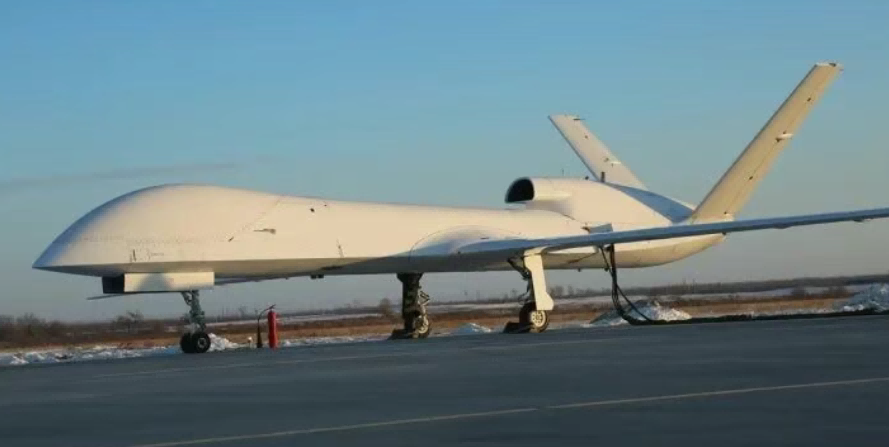
The WJ-700 Falcon UAV is approximately 14 meters long, has a wingspan of 22 meters, a height of about 4.5 meters, and a maximum takeoff weight of 3.5 to 3.8 tons. It is powered by a dorsal-mounted turbofan engine with a thrust of approximately 1 ton. Its maximum speed is 650 km/h, with a cruising speed of 600-620 km/h; maximum ceiling is 18,000 meters, service ceiling is 15,000 meters, endurance is 20 hours, and maximum range is 10,000 to 14,000 kilometers. It is equipped with 6 external hardpoints, capable of carrying up to 840 kg of external payload.
Internally, it can accommodate 200300 kg of payloads such as electro-optical, radar, and electronic reconnaissance equipment. In terms of payload capability, the WJ-700 can carry the CM-102 anti-radiation missile; the C701 light anti-ship missile with a range of 1520 km and a weight of 117 kg, used against small boats; the C705 light anti-ship missile with a range of 75 or 170 km, a weight of 320-340 kg, and a warhead weight of 110-130 kg, used against small surface vessels; and a series of other payloads like the CM-502KG air-to-ground missile with a range of 25 km.
In terms of endurance, the WJ-700's maximum flight time of 20 hours offers little advantage. It falls short of the Wing Loong-1's 24 hours, the Wing Loong-1D's 35 hours, the Wing Loong-2's 28 hours, the CH-4B's 14/20 hours, and the improved CH-5's 30-40 hours or even 120 hours.
However, the WJ-700's speed and range are excellent. The Wing Loong-1 and Wing Loong-1D have a maximum speed of only 280 km/h; the Wing Loong-2 is slightly better at 370 km/h; the CH-4B is surprisingly slow at 235 km/h, with a cruising speed of only 180 km/h; the CH-5 UAV's speed is 300 km/h. These propeller-driven long-endurance reconnaissance-strike UAVs indeed have long flight times, but their speeds are generally modest. In contrast, the turbofan-powered WJ-700 boasts a maximum speed of up to 700 km/h and a cruising speed of 600-620 km/h, far exceeding the speeds of propeller-driven models like the Wing Loong-1, Wing Loong-2, CH-4, and CH-5. Greater speed means it can reach the combat zone faster and engage time-sensitive targets more effectively.
Feature Summary
Nothing that flies faster than the WJ-700 can match its range; nothing with greater range can match its speed; and anything that surpasses it in both range and speed is heavier and has higher operational costs. It can be said that this UAV is truly an excellent unmanned reconnaissance aircraft, or one with certain ground-attack capabilities. Its performance is genuinely impressive. The 3.5-ton WJ-700 simultaneously achieves a cruising speed over 600 km/h, a flight altitude at the 15,000-meter level, and a maximum range at the 10,000-kilometer level. It represents an excellent integration of price, performance, and operational cost, making it a truly outstanding UAV.
Egypt's Requirements
For Egypt, purchasing 10 sets of WJ-700 for $400 million is an absolutely worthwhile deal. After all, among currently exported UAVs, only the American MQ-9 can be compared to the WJ-700. The export price of the MQ-9 is in the hundreds of millions of dollars, making it very expensive. While the WJ-700's performance may not match the -9, for Egypt, which does not have long-range reconnaissance needs, the combined reconnaissance effectiveness of two WJ-700s is significantly higher than that of a single MQ-9. Egypt does not possess any UAV with performance comparable to the WJ-700. Furthermore, as a reconnaissance-strike UAV, the WJ-700's long endurance, extensive flight range, and precision strike capability make it well-suited to counter the low-intensity threats from neighboring countries that Egypt frequently faces. Against the backdrop of significant UAV threats in the Mediterranean, the WJ-700 can also assume the role of an air interceptor, reducing Egypt's air defense pressure.
When facing Israel, the WJ-700 can conduct uninterrupted 24/7 patrols, thereby deterring most of Israel's risky ventures. Leveraging its endurance advantage, the WJ-700 can also loiter for extended periods near Israel's territorial waters, tying down the Israeli Air Force's resources and forcing Israel to expend its fighter jets' flight hours.